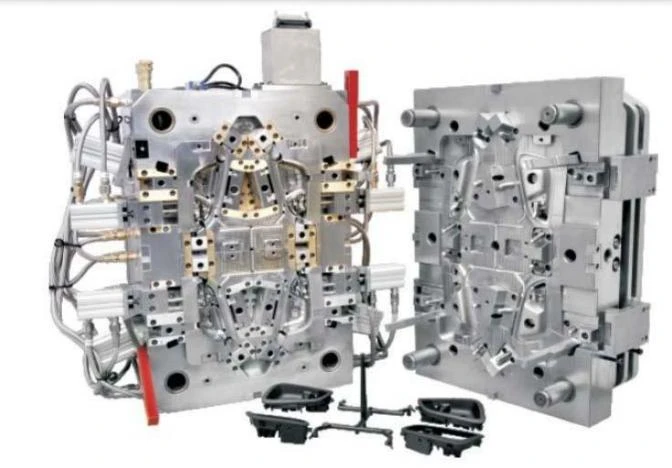

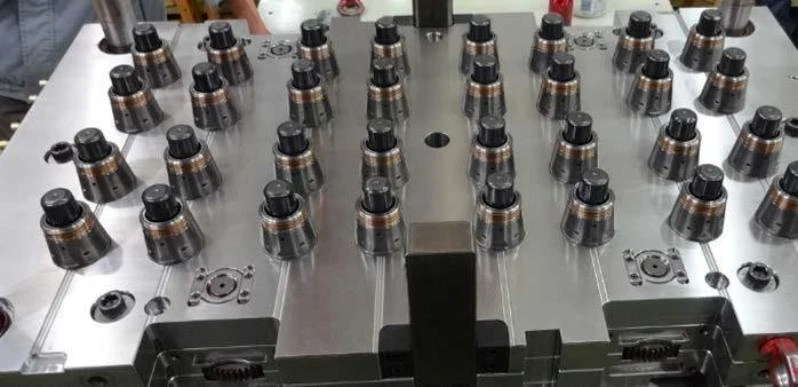
Key takeaways
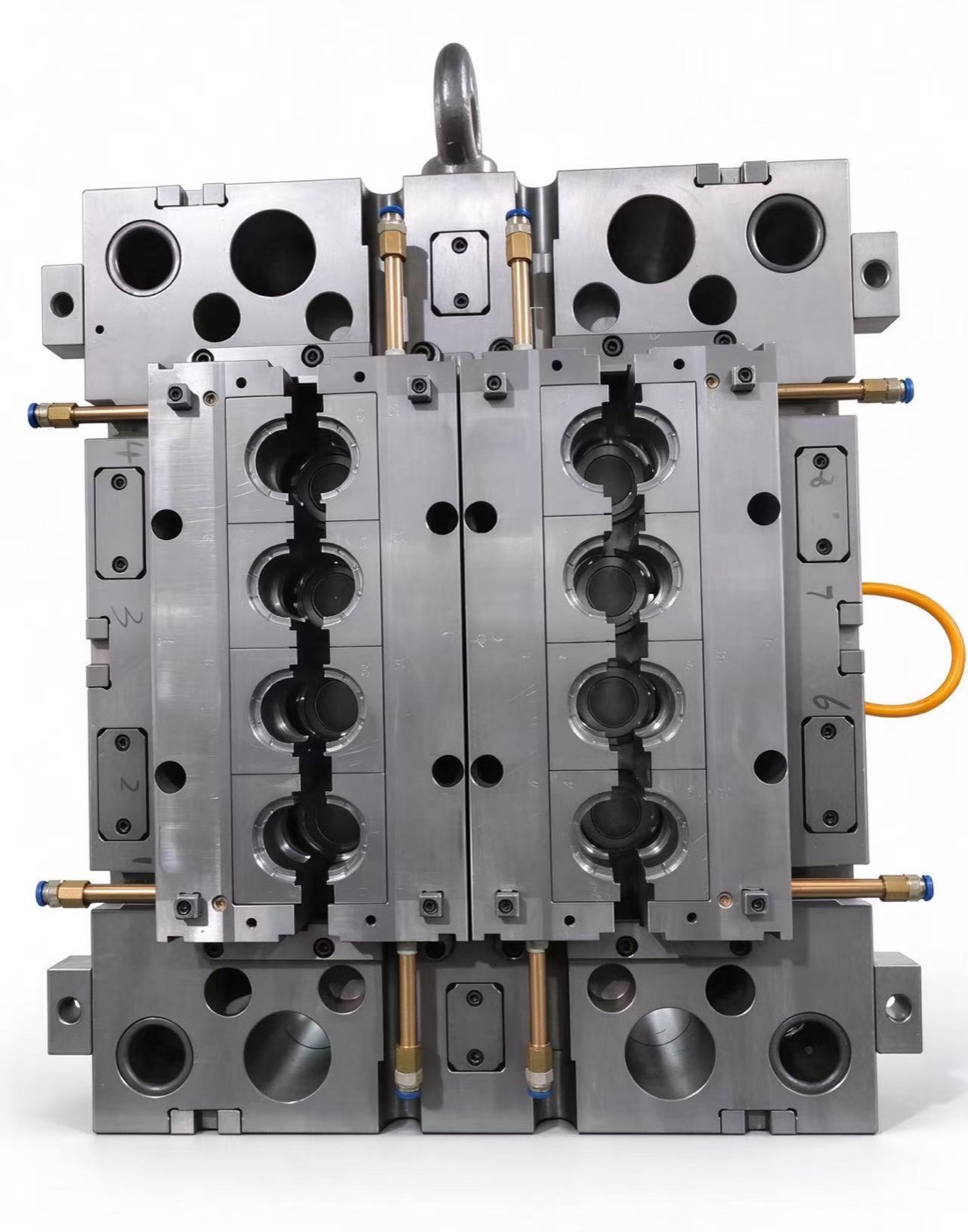
- Case 1: PET cream jar body, 8-cavity hot runner mold. Sink marks and flow ripples on the thick wall solved; in production for 3 years at about 20,000 parts a month.
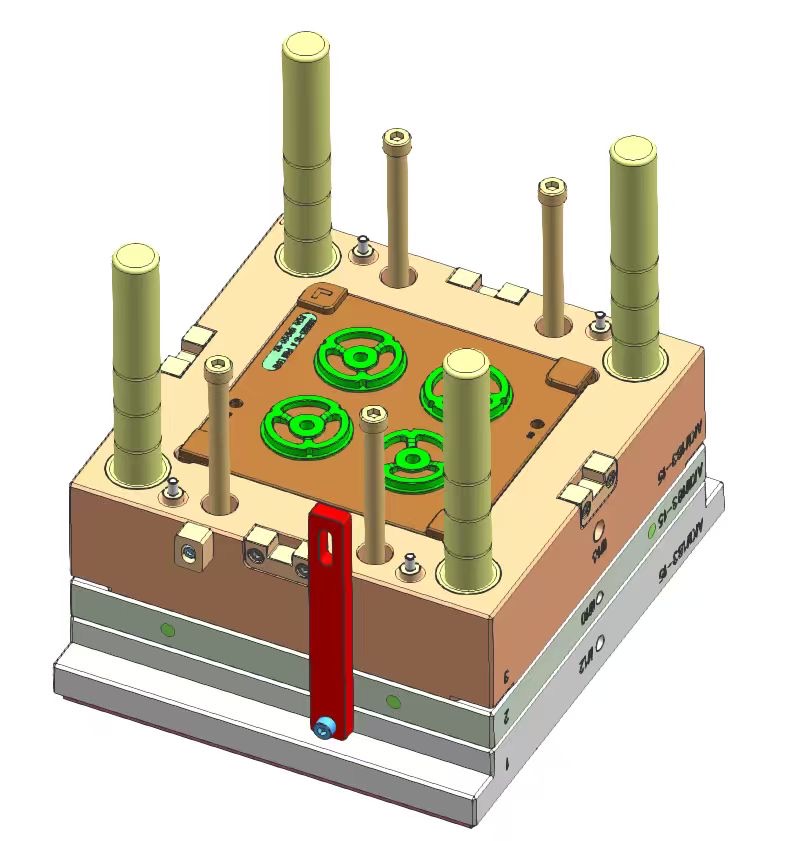
- Case 2: PMMA knob for a German electronics customer, 4-cavity hot runner mold. Part structure optimized for assembly fit; about 50,000 parts a month.
- Case 3: PC lamp housing for an Italian customer, single-cavity cold runner mold. Part and mold features optimized to fit metal hardware; about 5,000 parts a month.
- All three molds were built in ASSAB S136 steel and reached T1 samples within our usual 4 to 6 weeks for complex molds.
- Customer names are not published; industries and countries are shared with the customers' agreement.
Three projects at a glance
These projects cover three of the markets we serve: cosmetic packaging, consumer electronics and lighting. They also cover the main tooling choices buyers ask about: an 8-cavity and a 4-cavity hot runner mold, and a single-cavity cold runner mold. The table compares them side by side.
| Item | Case 1 | Case 2 | Case 3 |
|---|---|---|---|
| Market | Cosmetic packaging | Consumer electronics | Lighting |
| Customer location | Export customer | Germany | Italy |
| Part | Cream jar body | Control knob | Lamp housing |
| Resin | PET | PMMA | PC |
| Mold | 8-cavity hot runner | 4-cavity hot runner | Single-cavity cold runner |
| Steel | ASSAB S136 | S136 | S136 |
| Main challenge | Sink marks and flow ripples on a thick PET wall | Assembly fit of the knob | Fit with metal hardware |
| In production | 3 years | 6 months | 1 year |
| Monthly volume | About 20,000 parts | About 50,000 parts | About 5,000 parts |
Case 1: 8-cavity hot runner mold for a PET cream jar
The part and the challenge
The customer, a cosmetic packaging brand, needed the body of a cream jar molded in PET. Cosmetic jars are judged by eye on the shelf, so the wall must look clean and even. Thick walls are where PET is most difficult: the center of the wall keeps shrinking after the surface has set, which leaves sink marks, and uneven flow can leave ripples, often called water ripples, on the visible surface.
What we did
- Mold layout: an 8-cavity hot runner mold, so every cavity is fed directly and the jar can be produced without a cold runner to trim or regrind.
- Steel: ASSAB S136 for the cavities, a stainless grade that holds a high polish for a cosmetic surface.
- DFM in 3 days: the part and mold layout were reviewed before steel was ordered.
- Trials: the sink marks and ripples on the thick wall were resolved through the T0 and T1 trials, before sample approval.
The result
The mold has been in production for 3 years, running about 20,000 jar bodies a month. Our guide to injection molding defects explains why thick walls cause sink marks and how they are corrected in the mold and the process.
Resin
PET
Cavities
8, hot runner
Steel
ASSAB S136
Production
3 years, about 20,000 parts a month
Case 2: 4-cavity PMMA knob for an electronics brand in Germany
The part and the challenge
A consumer electronics customer in Germany needed a control knob in PMMA. A knob is small, but it is the part the end user touches most. It must look clear and clean, and it must fit the product precisely: too tight and it will not turn smoothly, too loose and it feels cheap. The main challenge in this project was the assembly fit.
What we did
- Part structure: we optimized the structure of the knob to adjust the assembly fit with the customer's product.
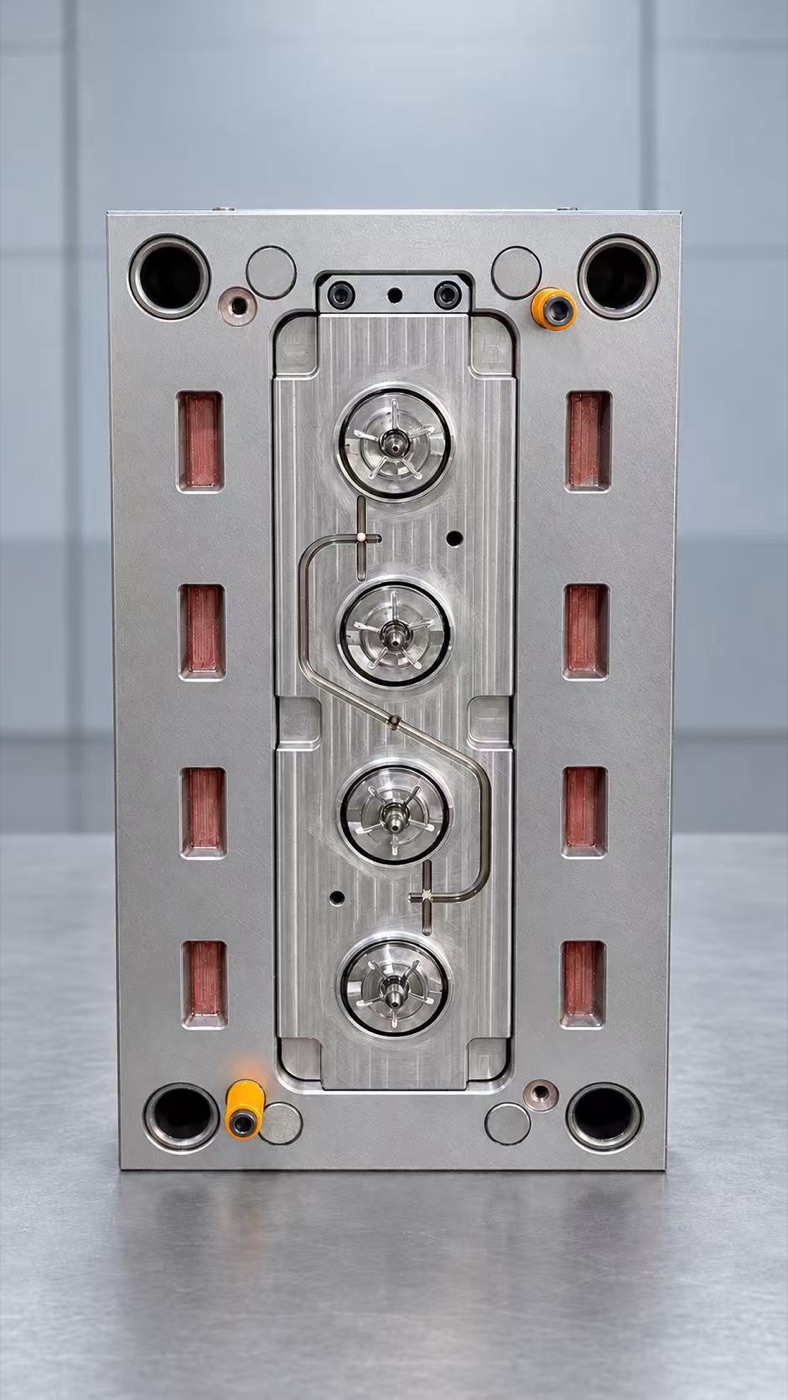
- Mold layout: a 4-cavity hot runner mold, a good balance between output and consistency for a small precision part.
- Steel: S136, which takes the polish a clear PMMA part needs.
- Trials: the fit was confirmed on the customer's assembly at the T1 stage, before production.
The result
The knob has been in production for six months at about 50,000 parts a month. For more on choosing a runner system for small, high-volume parts, see hot runner vs cold runner molds.
Resin
PMMA
Cavities
4, hot runner
Steel
S136
Production
6 months, about 50,000 parts a month
Case 3: single-cavity PC lamp housing for a lighting customer in Italy
The part and the challenge
A lighting customer in Italy needed a lamp housing in PC. The housing is assembled with metal hardware, so the plastic part has to fit those metal parts exactly. A housing that is slightly out of shape, or a mounting feature in the wrong place, stops the lamp from being assembled.
What we did
- Part and mold features: we optimized the product structure and the mold features so the housing fits the metal hardware.
- Mold layout: a single-cavity cold runner mold, a practical choice for a larger part at a moderate volume.
- Steel: S136.
- Trials: the fit with the metal hardware was checked at T1 and approved before production.
The result
The housing has been in production for one year at about 5,000 parts a month. Low and medium volumes like this are one of the reasons a cold runner can be the right choice, as our runner guide explains.
Resin
PC
Cavities
1, cold runner
Steel
S136
Production
1 year, about 5,000 parts a month
What the three projects have in common
The parts are different, but the way the projects ran was the same. That is deliberate: a predictable process is what lets a buyer plan a launch.
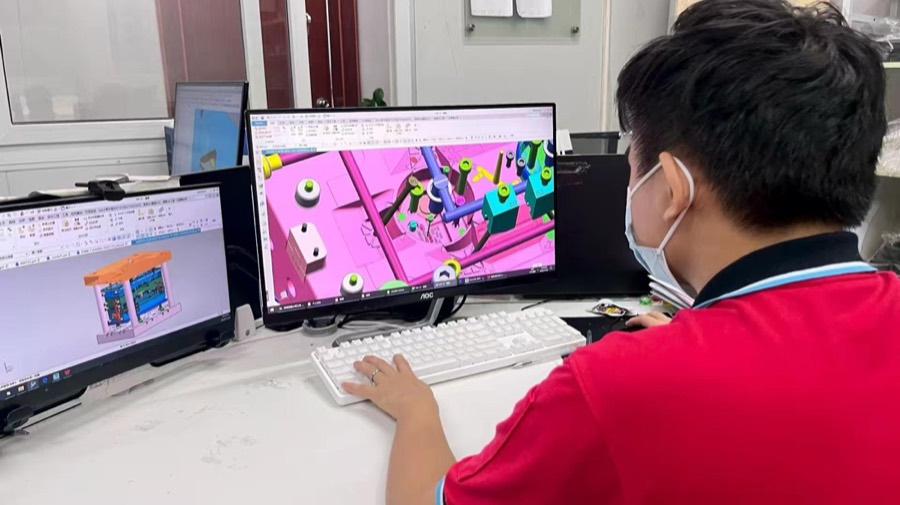
- Free DFM reviewEach part was reviewed before steel was ordered. DFM is free for every project.
- Quote in 1 to 2 working daysThe mold and part price were quoted on the agreed design.
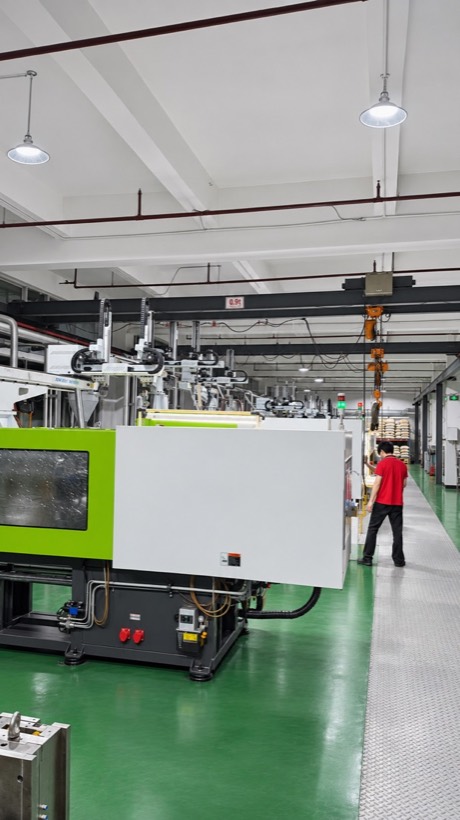
- T0 and T1 trialsFirst samples were molded on our own Yizumi presses, corrected and molded again.
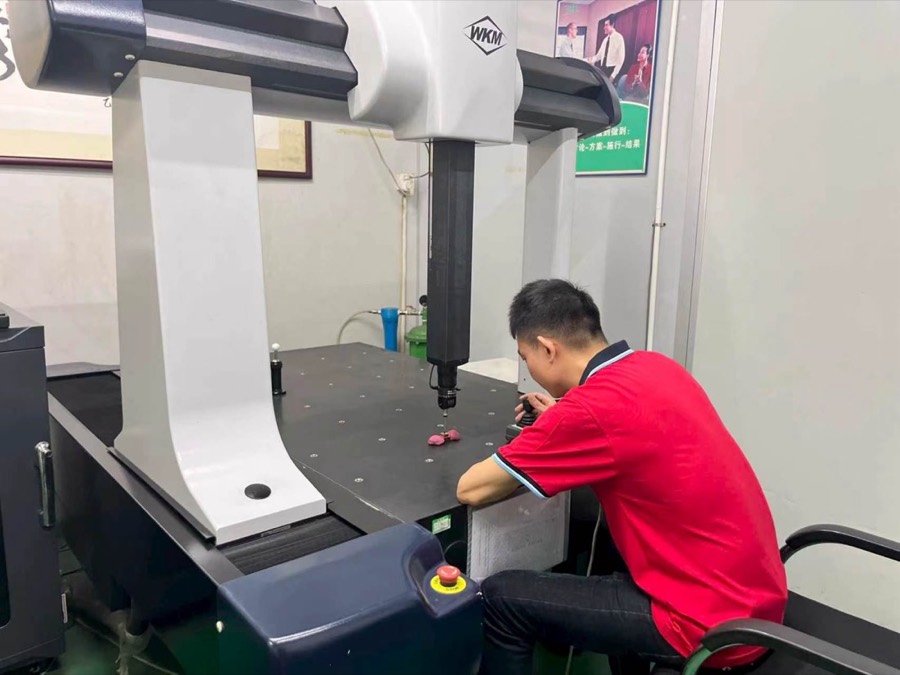
- Measured approvalSamples were measured on our CMMs and approved before the mold moved to production.
T1 samples are free. As on every mold we build, half the mold price was paid with the order and half after sample approval. The mold belongs to the customer, and we sign an NDA and do not use a customer's mold for anyone else.
Typical lead times for your project
The cases above were medium-complexity molds. As a general guide from our toolroom:
- Simple molds: about 3 to 4 weeks from drawing approval to T1 samples.
- Complex molds with slides, lifters or multiple cavities: about 4 to 6 weeks to T1.
- Simple mold changes after a trial: about one week, depending on the change.
- First production parts after mold approval: about one week for orders below 5,000 pieces.
We can make molds for parts up to about 1 meter long. Molds and parts ship in wooden crates by sea, air or express.
How to start a project like these
- Send your files3D model and 2D drawing, resin, annual volume and the faces that must look perfect.
- Sign an NDA if you need oneWe sign it before you share confidential designs.
- Receive a free DFM review and a quoteUsually within 1 to 2 working days.
- Approve and order50 percent of the mold price starts the build.
- Approve samplesT1 samples are free; the balance is paid after approval.
If you cannot visit Dongguan, we can walk you through the factory on a video call. We work in English and Japanese, and reply to inquiries within 24 hours on working days.
Frequently asked questions
Can I see examples of molds ACKOR has built?
Yes. This page describes three export projects: an 8-cavity hot runner PET jar mold, a 4-cavity hot runner PMMA knob mold for Germany and a single-cavity cold runner PC lamp housing mold for Italy. We can also show tooling on a video factory tour.
How long does ACKOR take to build an injection mold?
About 3 to 4 weeks to T1 samples for a simple mold, and about 4 to 6 weeks for complex molds with slides, lifters or multiple cavities.
Is the DFM review free?
Yes. DFM is free for every project, and T1 samples are free as well.
What are ACKOR's payment terms for molds?
50 percent of the mold price with the order and 50 percent after the samples are approved. Specific terms are set in the contract.
Who owns the mold?
The customer owns the mold. We sign an NDA and do not use a customer's mold to make parts for anyone else.
Why are customer names not shown?
Most customers protect their supply chain. We share the industry and country with their agreement, and the project details on this page are real.